I lead product and ship code.
AI lets me take a customer conversation all the way to working software myself: work out what needs to change, build a functional first version, and put it in their hands. That lets us test the workflow, its logic, and its edge cases while the direction is still taking shape.
I stay hands-on through production: I lead the team that delivers the product and contribute frontend and backend code alongside them. I also build the shared tools and standards that make the next release faster.
I co-founded InquisitHealth and led its 12-person product and engineering team as the business reached $5M ARR and was acquired by Pyx Health. At Pyx, I led product and engineering for an AI platform deployed across dozens of health plans, with responsibility for data engineering and machine learning.
Explore the workNow
- Behavioral health
- In-person and virtual group scribe
- Leads the clinician pod
- Frontend and backend code
Give clinicians a reason to bring patients in
We wanted clinicians to invite patients into an app for support between sessions. Working through a functional prototype with clinicians showed us the adoption problem: the invitation added work to their day and did nothing for the work already on it.
- Goal
- Patients in the app for support between sessions, invited by their clinician.
- First step, as planned
Removed: Ask clinicians to invite their patients.- What clinicians told us
- The invite added work. Group-session notes were still a burden; the scribes they had covered only one-to-one sessions.
- First step, as released
- Added: A group scribe drafts session notes for clinician review. Those notes inform each patient’s clinician-approved care plan. The care plan is what the patient app delivers between sessions. It gives the clinician a reason to invite the patient, and the patient a reason to join.
I led those conversations, built and iterated the prototype, and set the roadmap. The engineering team and I took the group scribe from concept to production in less than one month, with me contributing frontend and backend code.
For in-person groups, we mapped voices to participants. For virtual groups, a bot captured the session.
The first release had fewer defects and needed a shorter user acceptance test than our previous launches.
Make the next release easier for the team
Alongside the product, I built the instructions and development workflow our coding agents use: codebase conventions, design guidance, and review rules. Product specifications and prototype screens gave engineers and agents a shared reference for expected behavior.
Create the group session
Attribute who said what
Finish the notes
Decide the behavior before implementation
The prototype let us test logic and edge cases, like a workspace with 50 records instead of five. Product and engineering settled those questions before anyone wrote production code.
From one group session to individual notes
I built this illustrative group workflow separately, without employer code. Patients, voiceprints, and audio are fictional. Capture a session, confirm who said what, and review each person’s note. Try an unmatched voice, a quiet participant, an interruption, or a failed save.
Group Scribe
Illustrative workflow · fictional recordsStress & coping group
One conversation, distinct voices.
Individual notes for clinician review.
Capture a group, match the voices, then review each person’s participation and follow-up.
How the prototype carried into engineering
I walked internal clinicians and prospective users through the prototype, and what they ran into shaped the first release. JavaScript facades stood in for live integrations, so we could test with realistic data and make things fail on purpose.
The product spec recorded decisions we had already made in working software. Product and engineering used it as the shared reference for expected behavior, and checked it again in user acceptance testing.
Live use still turned up differences across devices and working habits. We kept collecting feedback and refining after launch.
The engineering workflow draws on Addy Osmani’s open-source agent skills, adapted to the team’s system.
2024 to 2026
- Pyx Health
- Led product and engineering
- Data engineering and machine learning
Resolve the barrier behind the referral
A referral can be opened without helping the person who received it. At Pyx Health, I led the team that built an AI platform to find what stood in the way, using prior conversations and recorded needs, then match the member with support and follow up on the outcome. It is deployed across dozens of health plans.
I made barrier resolution the outcome the system learns from. A finished task counts as progress, and the case stays open until we know whether the member got help.
Build the data foundation behind the conversation
I built high-throughput ETL and ELT pipelines for large incoming datasets, including AI-assisted header parsing. I also built the platform’s HIPAA-compliant cloud infrastructure on Azure.
Start from what the member has already shared
Each conversation uses the care gap on file, ninety days of care-coordinator notes, prior conversations, and recorded social needs. That context helps the system choose a response that fits the member’s circumstances.
Keep a human in the loop where judgment is required
The system chooses what to say, when to say it, and how much support to offer. A policy gate checks every message for clinical advice and for protected health information leaving the system. I kept benefit enrollment with a human navigator: the agent can identify the need and route the request, then it waits. Members below the readiness threshold also go to a person.
Decide what is ready to ship
Offline test suites and live guardrails covered quality, safety, latency, and cost, with audit logs behind them. Each release went through a weekly go or no-go, and routing was judged on whether the member’s barrier resolved.
A member may know where the food pantry is and still have no way to get there. This example uses a fictional member. Answer for her and watch the routing change.
- 09:14
A referral goes unused
A member has not acted on a food referral. Her coordinator’s notes mention cut hours and no car. The agent’s first message starts from those facts, in Spanish, after a policy check.
- 11:52
She answers three questions
Answer for her. Every choice maps to one defined value, so the system never has to guess what she meant.
When it comes to food, what feels like the biggest challenge right now?
If I shared the steps for the next thing to do, how comfortable would you feel doing it on your own?
Do you have a phone or computer you could use to get it done?
Readiness
Can she do it65%Can she get to it40%Does she want to80%Lowest score 40%. Guided, resources with follow-up.
Under 30% a person takes over. Under 50%, guided.
- 11:52
A navigator books the ride
The resource she needs is a ride, and the ride comes through a plan benefit that requires enrollment. I kept enrollment with a human navigator, so the agent routes the request and waits.
pass message policy: tone, no clinical advice, no protected informationrefused a ride requires a person
- 15:07
The outcome stays open
The ride is booked. Food access is still pending, so the system keeps tracking it.
Read the full run, annotated
Synthetic data. No real member. Of the two checks, one passed and one was refused.
2012 to 2024
- InquisitHealth
- Co-founder, CTO and CPO
- 12-person product and engineering team
- $5M ARR, acquired by Pyx Health
A peer coaching platform that reached 50,000 members
I co-founded InquisitHealth and led its 12-person product and engineering team as the business reached $5M ARR, served more than 50,000 members, and was acquired by Pyx Health. The platform paired people managing a chronic condition with trained peers who had lived with it. We built the systems for finding and matching members, supporting peers on every call, and coordinating care afterward.
Keep the next action beside the conversation
Before a call, a peer needed the member’s history and open issues. During it, they needed a way to act on what came up without losing the conversation. I put member context, the live call guide, and care actions into one workspace, Peer Copilot, so a peer could arrange follow-up with the conversation still in view.
R. Okafor
- 61, type 2 diabetes
- A1c 8.4 in March, down from 9.1
- Peer since January, 6 calls
Last call: gas bill was past due; she planned to call the utility.
Open issues
Housing guide
“Last time you mentioned the gas bill. Where does that stand now?”
What she said
Care actions
Actions appear here as the conversation surfaces them.
Post-call checklist
Empty until the peer records something.
Notes, linked to issues
Each note carries the issue it belongs to.
I built the HIPAA-compliant cloud infrastructure on AWS that supported the platform.
The platform grew to include care coordination, operations, and content management before Pyx Health acquired InquisitHealth in 2024. I led the product and technical integration into Pyx Health afterward.
1.71 percentage points average reduction in HbA1c, a measure of blood sugar, among participants with diabetes. A published evaluation of InquisitHealth’s remote diabetes program at Montefiore found this change among the 179 participants with HbA1c results from before and after the program. It was a before-and-after comparison with no control group.
v1.0
- Independent
- Open source, MIT
- Running on this site
Feedback with enough context to act on
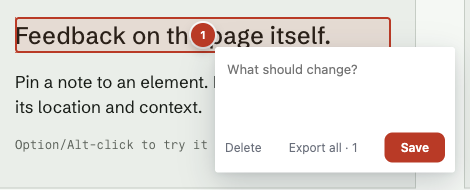
Product feedback often arrives without the context needed to act on it. I built Pinflow to attach the comment to the page element and export that context for a coding agent. It is open source and running on this site.
It installs with one script tag. Option/Alt-click any element, or press and hold on a phone, to leave a note.
Background
Before InquisitHealth, I worked in healthcare digital strategy, enterprise data engineering, and product management. I have been a co-investigator on research funded through the NIH Small Business Innovation Research (SBIR) program.
In the press
Fierce HealthcareThe Activation platform launch MobiHealthNewsWhat healthcare AI needs to prove in 2026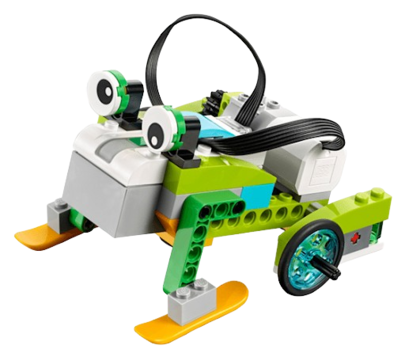
I run Bricks & Motors, after-school LEGO robotics and STEM classes for elementary-aged children in northern New Jersey, Rockland County, and southern Connecticut.
Bricks & Motors